§ 02 · A
Slow Making
緩 慢 製 作
每件作品從手捏到出窯約需 4-6 週。超慢。緩慢不是美學選擇,是材料的特性——土需要時間乾燥、釉藥需要時間調配整理、窯需要時間升降溫。
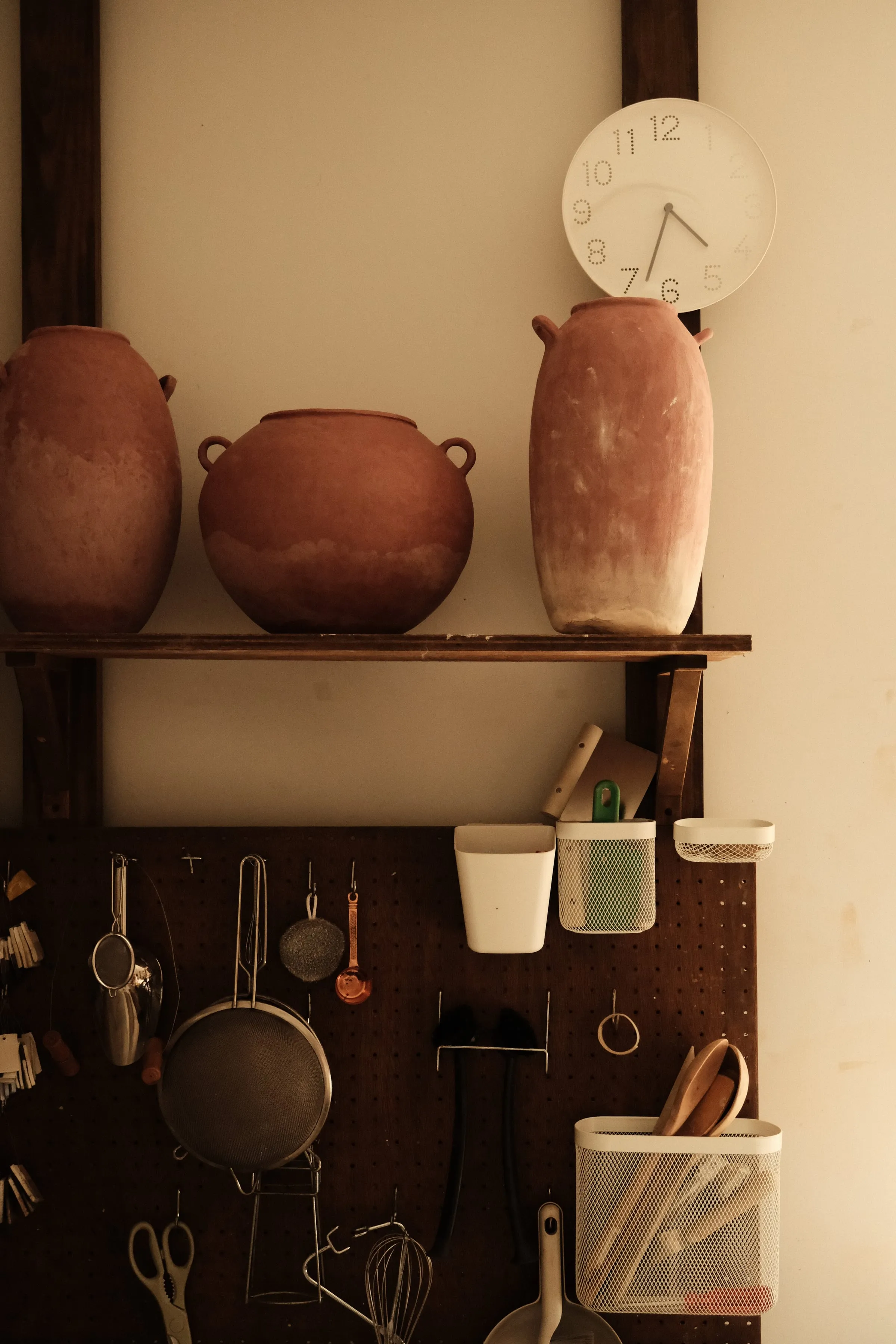
A peninsula of earth — still attached to the mainland, but already reaching into another sea.
一塊從"我"向外觸伸的新生地——
在每日通勤的辦公室與每個週末沾滿土的雙手之間,
連著陸地,但已經探進另一片水域。
本業是前端工程師,而陶藝的起點是餐桌——煮飯的時候,總希望盤子、杯子、收納罐能更好看一點。後來開始自己學做陶,才發現這是一個比想像中更廣袤的世界:有人用最古老的方法做最日常的器物,也有人把陶當作百變多端的雕塑材料。
我花了一段時間試各種風格——拉坯(出師不利、中道崩殂)、手捏、各種釉色、各種燒法——也看了很多藝術家與工藝師的作品。最近才慢慢找到自己最舒服的方向:手捏盤泥條的器物、自配釉藥、能用且能安靜地放在生活裡。
Earthscape 是這個生活哲學的名字。
台灣人的諧音病是不可能錯過工作室取名機會的。英文裡藏著四個讀法:earthscape(大地的景緻)、earth scape(土的紋理)、earth's cape(陶土的岬角)、escape(出走)。用一個字包裹我想表達的一切。
中文取名「埴角」。「埴」是製陶用的黏土——來自一段我最喜歡的文字,《道德經》「埏埴以為器,當其無,有器之用。有之以為利,無之以為用。」。「角」即海岬,與「岬」字互通——從陸地向海突出的部分。
埴角——黏土的岬角。從日常生活的餐桌出發,走到這裡。
I am a frontend engineer, and ceramics started at my own dining table. While cooking, I kept wishing the plates, cups, and storage jars looked a little better. So I tried making them myself. The deeper I went, the wider the world became: some people use the oldest methods to make the most everyday objects; others treat clay as endlessly transformable sculptural material.
I spent a while trying everything — wheel throwing (disastrous, abandoned mid-way), hand-building, various glazes, various firings — and looked at a lot of work by other artists and craftspeople. Only recently have I found the direction that feels most like mine: coil-built vessels, glazes I mix myself, functional, quiet enough to live with.
Earthscape is the name of this way of living.
Taiwanese can't resist a good pun when naming a studio. The English hides four readings: earthscape (the landscape of earth), earth scape (the texture of earth), earth's cape (a cape made of clay), escape. A single word, wrapping everything I wanted to say.
The Chinese name is 埴角. 「埴」(zhí) is the classical character for ceramic clay, from a passage I love in the Dao De Jing: "Knead clay to form a vessel; it is the emptiness within that makes it useful. What is, provides advantage; what is not, provides use." 「角」(jiǎo) means a headland or cape — like Cape of Good Hope, or Taiwan's southernmost point, Eluanbi.
埴角 — the cape of clay. From a dining table to here.
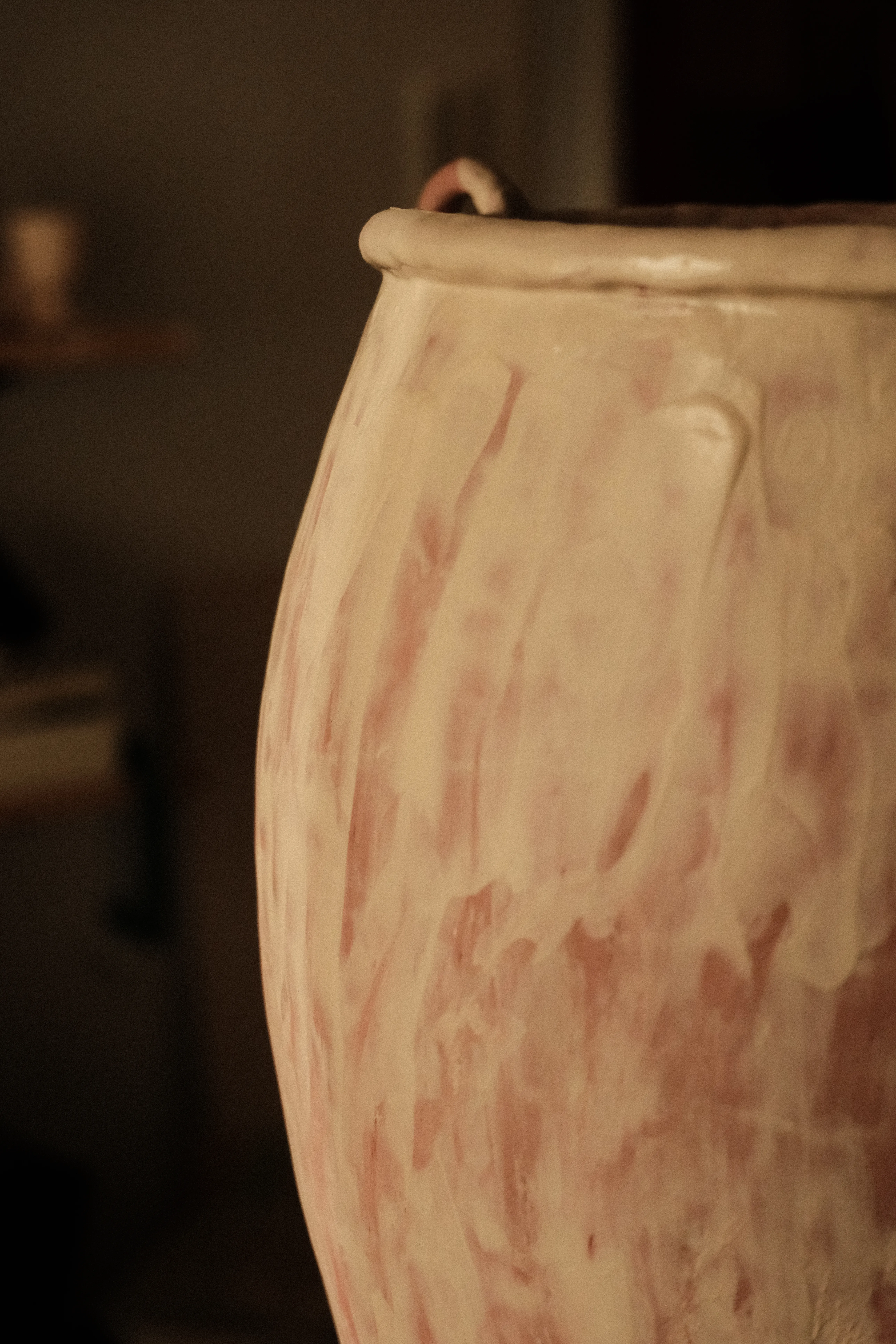
每件作品從手捏到出窯約需 4-6 週。超慢。緩慢不是美學選擇,是材料的特性——土需要時間乾燥、釉藥需要時間調配整理、窯需要時間升降溫。
以手捏與盤泥條成形。從一塊土開始,一圈一圈的堆疊。指紋的轉折、泥條的接縫、口沿的歪斜——這些是手作的痕跡,也是時間的紀錄。
以 1230°C 燒成,依作品需要選擇還原焰或氧化焰。還原焰讓作品充滿各種驚喜,也許是火痕,也許是還原強弱間的色彩變化;氧化焰則是提供更穩定與安靜的氣氛與色調。
依照作品表現需求混合使用 台灣黃土 美國土 日本土,呈現多樣化的紋理與色彩。
所有釉藥皆自行調配,從原料開始。長石、石英、高嶺土作為基底,加入氧化鐵、銅、鈷或草木灰調色。像是做菜,同樣的材料經過不同的程序;結果可能是小籠湯包,也可能是一碗什錦麵,上桌前一切都是驚喜。
所有作品皆編號、登記、落款。每件都有唯一的 accession number——ES · 年份 · 系列 · 類別 · 序號。